

LUMS School of Education Hosts International Education Summit 2026

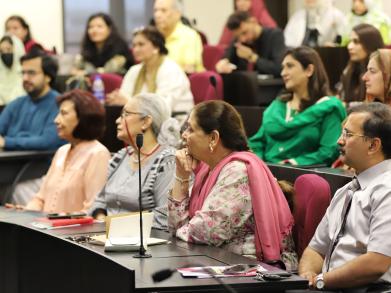
Lahore, November 2026: The LUMS School of Education (SOE), in collaboration with the Data and Research in Education Research Consortium (DARE-RC), hosted the International Education Summit 2026 (EDCON26) at LUMS on October 31 and November 1. Held under the theme “From Evidence to Action: Shaping the Future of Education in Pakistan,” the two-day summit brought together researchers, policymakers, education practitioners and sector leaders to discuss how research can inform education policy and improve learning outcomes across the country.
The summit drew on findings from 44 research studies and scoping papers, providing a platform to examine key challenges in Pakistan's education sector and consider how evidence can inform responses to them. The opening session featured remarks by LUMS Vice Chancellor Dr Ali Cheema, DARE-RC Programme Director Saima Anwer, and Maria Wyard, Head of Human Capital, Inclusion and Governance at the British High Commission. Nadeem Mahbub, Federal Secretary, Ministry of Federal Education and Professional Training, also addressed the gathering, followed by a keynote address from Dr Adil Najam, President of WWF International and former Vice Chancellor of LUMS.
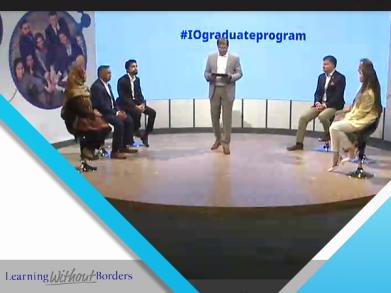
SOE faculty contributed to discussions throughout the summit. Dr Faisal Bari, Associate Professor at SOE and Senior Research Fellow at IDEAS, moderated the opening plenary, “Why Evidence Matters for Education Reform,” and participated in the panel discussion alongside leaders from the education and development sectors. The conversation examined the role of research in shaping education reform and the importance of connecting evidence with policy decisions.
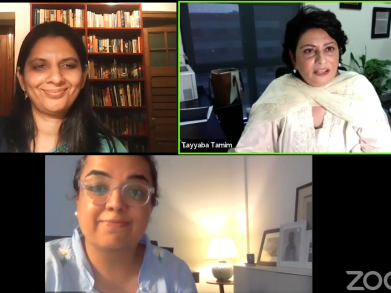
Research on data and artificial intelligence in education featured prominently in the programme. Dr Tayyaba Tamim, Dean of SOE, presented findings from the study on AI use in Pakistani classrooms, while Dr Farah Nadeem, Assistant Professor at SOE, contributed to discussions on data, AI and evidence-informed decision-making and presented research on Pakistan's assessment data-use architecture. Dr Jessica Albrent, Assistant Professor at SOE, moderated the session on data and AI. Khansa Maria, Visiting Faculty at LUMS and DPhil student at the University of Oxford, moderated a session on the pathways through which evidence can inform policy.
Other LUMS researchers also shared their work during the summit. Dr Zubair Khalid, Associate Professor at the Syed Babar Ali School of Science and Engineering, presented research on climate-related educational disruptions, while Dr Farah Said, Assistant Professor of Economics and Executive Director of the Mahbub ul Haq Research Centre, presented findings on large-scale human capital interventions in Punjab. Dr Tayyaba Tamim also hosted the Dean's Forum, “Bridging Research, Policy, Practice and Democracy,” which brought together academic perspectives on the relationship between research and education policy.
The programme covered a range of issues, including teaching and the education workforce, inclusion and climate resilience, governance and accountability, language policy, and the scaling of education interventions. Sessions brought researchers into conversation with practitioners and policymakers, while policy labs provided space to consider research findings in relation to specific challenges in the education system.
The summit also featured contributions from national and international education leaders, including Dr Asyia Kazmi of WISE, Qatar Foundation; Dr Nishat Riaz of Malala Fund Pakistan; Shehzad Roy of Zindagi Trust; Riaz Ahmed Kamlani of The Citizens Foundation; and Abid Suleri of the Sustainable Development Policy Institute. Government representatives from across Pakistan, including federal and provincial education officials, shared perspectives on policy priorities, governance and implementation.
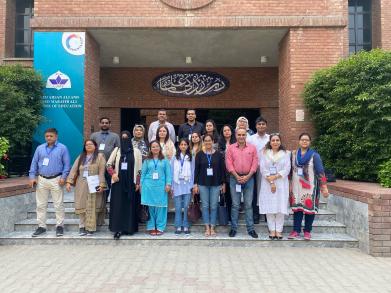
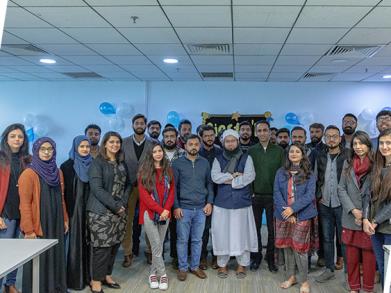
The closing plenary, “From Knowledge Generation to Knowledge Use,” brought the two days of discussions together, focusing on how research can be translated into policy and practice. The summit concluded with closing remarks by Dr Tayyaba Tamim, Dean of SOE, and Dr Ehtasham from DARE-RC, who thanked the speakers, panellists, moderators, partners and participants for their contributions to the summit. They also acknowledged the efforts of the organising teams and student volunteers in making the event possible. SOE extends its appreciation to all speakers, panellists, moderators, partners and participants for their valuable contributions to the summit. Special thanks go to the SOE team and the student volunteers, whose dedication, coordination and support played an important role in making EDCON26 a success.